
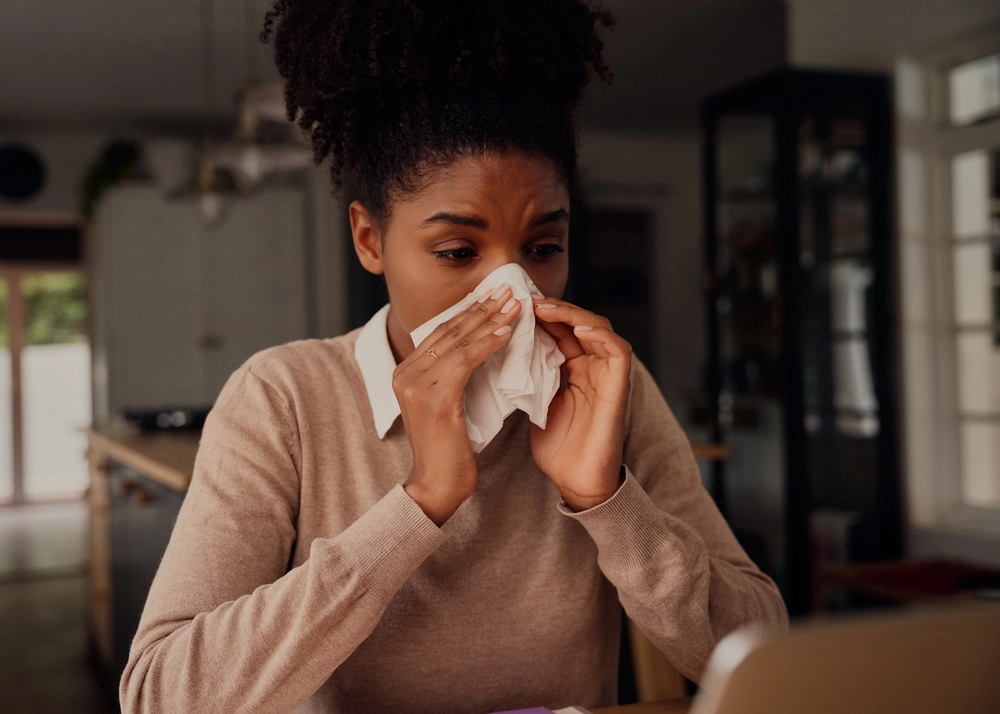
Indoor allergens like pollen, dust, pet dander, and mold can make your life miserable. From sneezing and coughing to an itchy nose and watery eyes, allergic reactions can have a significant impact on your health and well-being.
Whether your allergies flare up with the changing seasons or persist year-round, one of the most effective ways to improve your quality of life is to maintain good indoor air quality in your home.
If you’re suffering from allergies, keep reading to learn how your HVAC system can play a key role in reducing allergens within your home and help you find relief.
Common Indoor Allergens and Their Sources
First, let’s explore common indoor allergens and their sources. When you know where the allergens are coming from, you can more effectively keep them out of your home.
- Dust and dust mites: Dust often finds its home in carpets, furniture, and bedding.
- Pet dander: Many people are allergic to cats, dogs, and other furry friends. Like dust, pet dander can hide in textiles and other soft surfaces.
- Pollen: Pollen from outdoor plants enters through windows, doors, and HVAC intake.
- Mold and mildew: Fungi like mold and mildew thrive in moist environments like bathrooms, basements, or poorly maintained ducts.
- Volatile organic compounds: VOCs are gaseous chemicals released into the air from household cleaners, paint, and furniture.
HVAC Strategies to Reduce Indoor Allergens
Now that you’re familiar with where common indoor allergens come from, let’s explore some ways you can use your HVAC system to banish them from your home.
Don’t Forget Your Air Filter
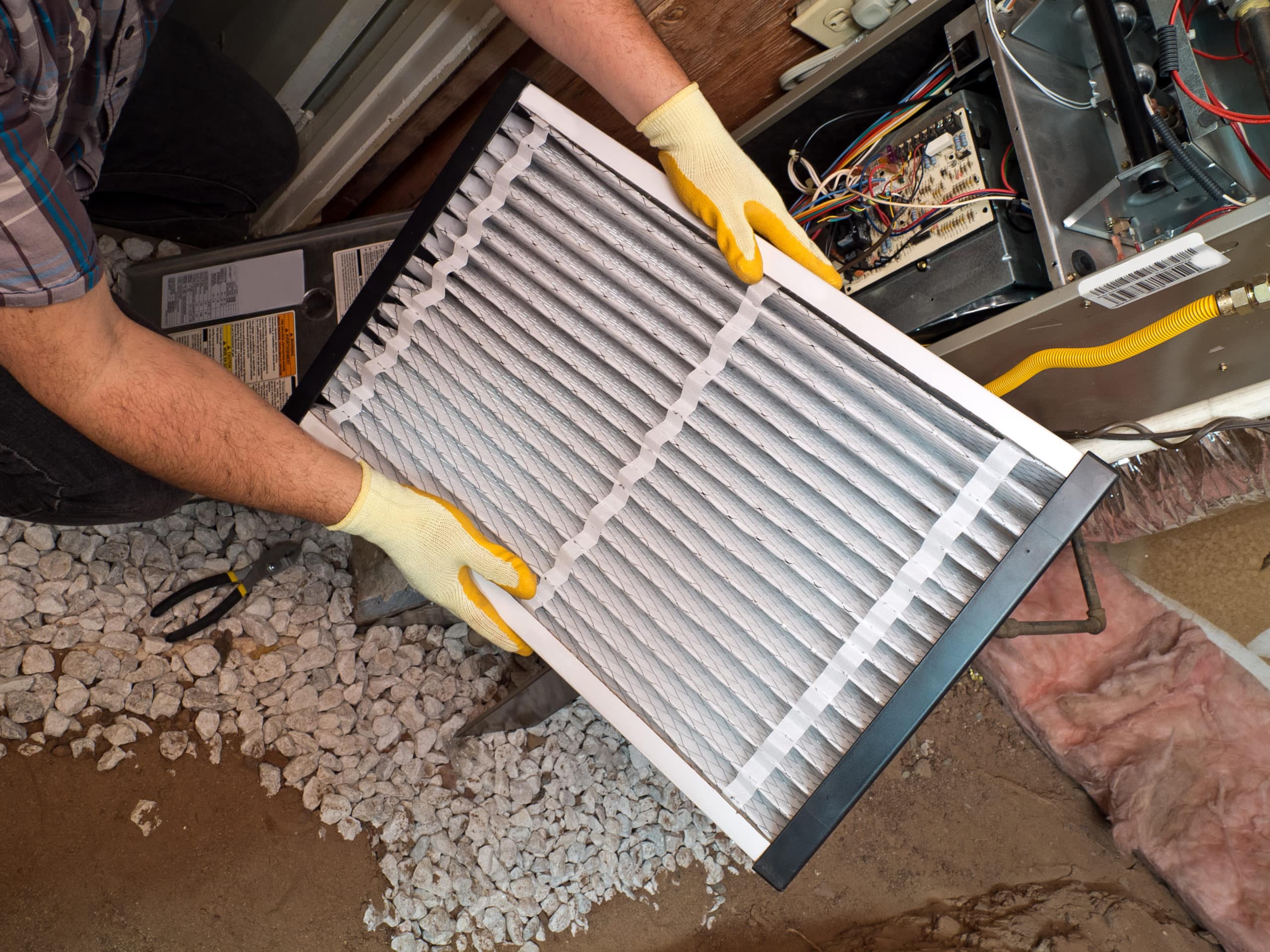
Your HVAC system’s air filter is responsible for capturing and trapping airborne particles, including allergens. It’s essential to change out the filter as often as the manufacturer recommends — typically every three months. When you neglect to change your filter, you risk reduced airflow and increased allergens.
If air quality is a concern, upgrade to a HEPA filter or one with a MERV rating between 9 and 12, as these filters can trap smaller particles than standard filters. Before making the switch, remember to check the filter’s compatibility with your HVAC system.
Install an Air Purifier or UV Light System
Air purifiers work by drawing in air, filtering out pollutants and allergens, and recirculating the cleaned air. They can either be added to the HVAC system or function as completely separate units.
UV lights are another add-on feature for HVAC systems designed to improve indoor air quality. They may not be effective against pollen and dander, but they kill mold, viruses, and bacteria, helping you breathe easier.
Control Humidity with a Dehumidifier or Humidifier
Ideal indoor humidity levels are between 30 and 50 percent. When humidity is too high, mold and dust mites thrive. On the other hand, when the air is too dry, it can irritate your respiratory system, exacerbating allergy-related issues. To keep humidity within ideal levels, consider adding humidity controls to your HVAC system or placing humidifiers or dehumidifiers throughout your home.
Seal and Clean Ductwork
Leaky ducts can pull in mold, dust, and other allergens, bypassing filtration systems and spreading these particles throughout your home. That’s why it’s important to seek professional inspection and cleaning services at the first sign of a leak.
Duct cleaning is another effective way to reduce allergens in your HVAC system. Over time, contaminants can build up in your ducts, affecting air quality. Seeking a professional cleaning every few years keeps them clear and free of allergens.

Keep Registers Clean
Vent covers have a lot of nooks and crannies that can collect dust and debris. Regularly vacuum and wipe them down to prevent build-up. If your registers are on the ground, you should also remove the vent covers periodically and check whether any dirt, crumbs, or pet hair have made their way into the opening. A quick once-over with the vacuum hose should be enough to clean it out and remove allergens.
Schedule Regular HVAC Maintenance
Seasonal inspections and tune-ups are essential for keeping your HVAC system in proper working order, maintain efficiency, and reduce allergens in your home. These maintenance appointments give HVAC technicians the opportunity to identify and address moisture issues, clogged filters, and dirty coils that could be impacting indoor air quality.
Consider HVAC System Upgrades
If your HVAC system is old or inefficient, it may be harder to achieve ideal air quality. Consider upgrading to a modern system with built-in air quality features, such as an air purifier or humidistat. Consult with an HVAC professional for recommendations tailored to your needs.
Improve Indoor Air Quality with Genuine Comfort
At Genuine Comfort, we’re committed to helping you improve your home’s air quality and find relief from airborne allergens. If you’re in need of expert advice, an inspection, or repairs, we’re here to help. Contact us today to get started!
Follow Us