
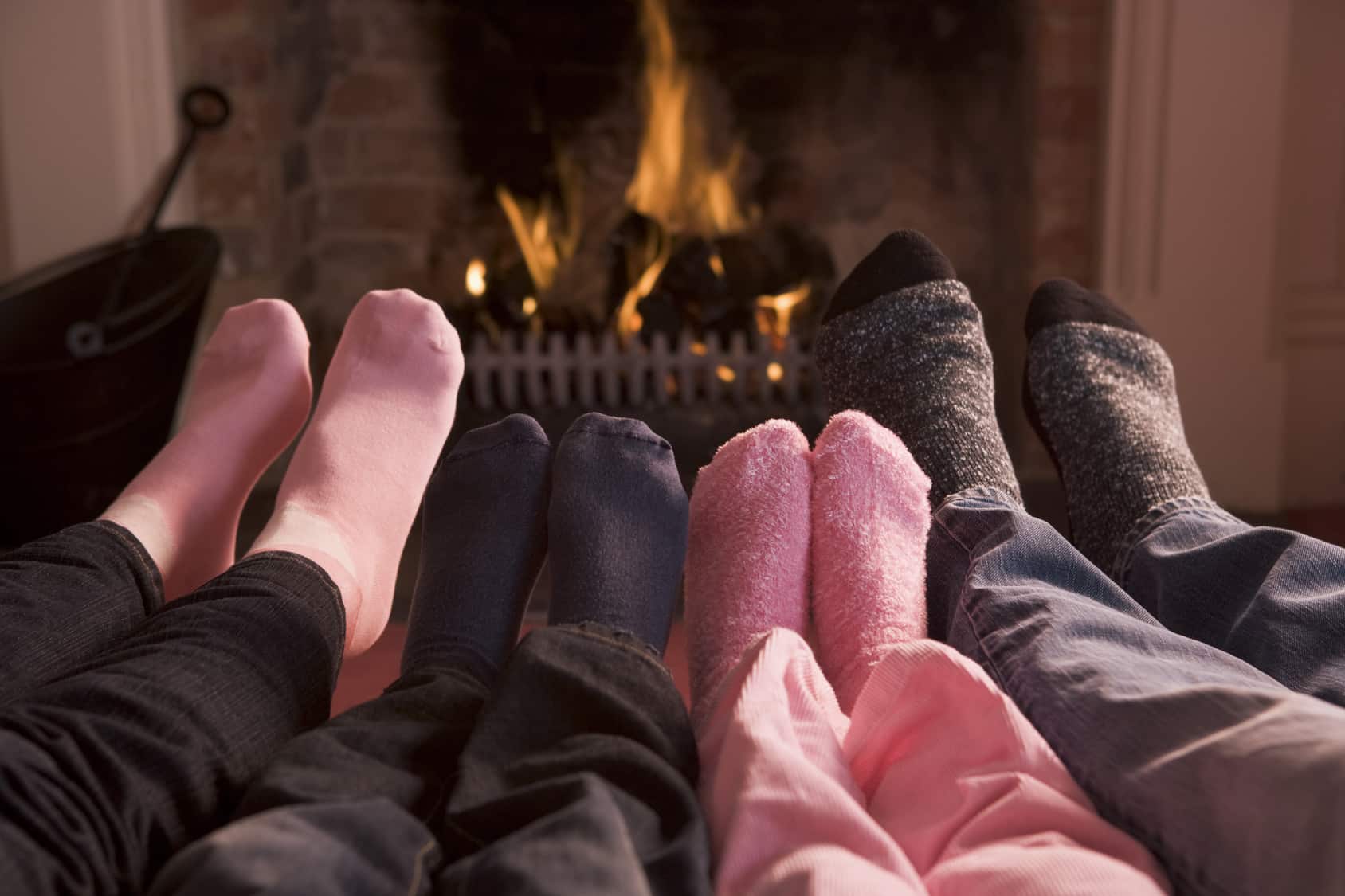
When you feel a bit of a chill while hanging out at home, you have a choice: Turn up the thermostat or fire up your fireplace. Many homeowners opt for the latter in an attempt to save money on heating costs, but is that really the best option?
In this blog post, we’ll compare the efficiency, cost, heat output, and safety of fireplaces and furnaces, helping you understand the right option for your home’s unique needs.
Understanding Energy Efficiency in Home Heating
If your goal is to maximize your home’s heating efficiency, it’s important to understand what exactly energy efficiency is and how it’s measured.
Energy efficiency is the amount of heat produced versus the amount of energy consumed. The goal is to produce more heat with less energy. When it comes to heating, efficiency is typically rated based on the Annual Fuel Utilization Efficiency (AFUE) metric, which is the percentage of heat produced compared to the amount of fuel consumed.
You also have to consider the potential for heat loss due to leaky ducts, drafty windows, insufficient insulation, or worn-out equipment. Just because something has a high AFUE rating doesn’t mean it will perform at that level in every situation.

How a Furnace Heats Your Home
Gas and electric furnaces provide whole-home, consistent heat. With thermostat control and zoning compatibility, furnaces allow you to customize your comfort level.
Modern furnaces are designed to minimize heat loss. When well-maintained and combined with proper insulation and sealed ductwork, they’re generally the most efficient way to heat your home.
How Fireplaces Heat Your Home
There are three main types of fireplaces — wood-burning, gas, and pellet stoves. Rather than distributing heated air through ducts and vents, they rely on electromagnetic waves to radiate heat outward through the surrounding space. Nearby objects absorb the heat, creating a warming effect.
Fireplaces also utilize a process called convection. The air near floor level is heated, then rises up toward the ceiling. The process repeats itself, distributing heat throughout the room.
Finally, some gas fireplaces use blowers to distribute warm air throughout the room.
Comparing Energy Efficiency
Let’s compare the energy efficiency of different heating methods:
Traditional Wood-Burning Fireplaces
Wood-burning fireplaces have a very low efficiency rating — often 10 to 30 percent. A lot of heat is lost through the chimney/flue; plus, they can actually pull warm air out of the home. This means they’re best used for ambiance, not as a primary heating method.
Gas Fireplaces
Direct-vent gas fireplaces typically have an AFUE of 60 to 80 percent. Vent-free models can reach higher efficiency ratings; however, neither is designed to heat an entire home. They’re best used for providing supplemental heat for a single room.
Fireplace Inserts and Pellet Stoves
Fireplace inserts and pellet stoves are more efficient than open fireplaces, offering better heat retention and distribution. They may be effective for zone heating in certain homes.
Furnaces
Any furnace with an AFUE of 90 percent or above is considered high-efficiency, 80 to 83 percent is mid-efficiency, and anything below that is low-efficiency. Because they heat your whole home rather than a small area, they’re typically the most efficient option. However, if you need a bit of extra heat in a single room, a fireplace can complement your furnace.

Cost Considerations
In addition to efficiency ratings, you should also consider the upfront and operating costs. Fuel like natural gas, electricity, wood, and pellets all cost money, and their cost is not necessarily proportional to the energy they create. You can use an online calculator to help you compare your options.
There’s also some hidden costs of fireplace use to be aware of. If you turn off your furnace while warming yourself by the fire, your home will lose heat, which means you’ll have to run it for longer to get your home back to a comfortable temperature. Plus, if you’re burning wood, you have to factor in chimney maintenance and cleaning, as well.
Safety and Indoor Air Quality Factors
Depending on what type of fireplace you have, you could be at risk of fire hazards, carbon monoxide poisoning, or inhaling increased smoke and particulates. While furnaces are much safer in this regard, it’s still important to seek regular inspections and maintenance to ensure they’re operating properly.
Tips to Maximize Heating Efficiency in Winter
If your goal is to maximize your home’s heating efficiency, use your furnace as the primary heat source, improve insulation and seal air leaks if necessary, use a programmable or smart thermostat, and use your fireplace strategically — not as a replacement for your furnace.
One of the best ways to maximize efficiency is scheduling annual furnace maintenance with Genuine Comfort. Contact us today to ensure your furnace is ready to keep you warm and comfortable all winter long.
Follow Us